
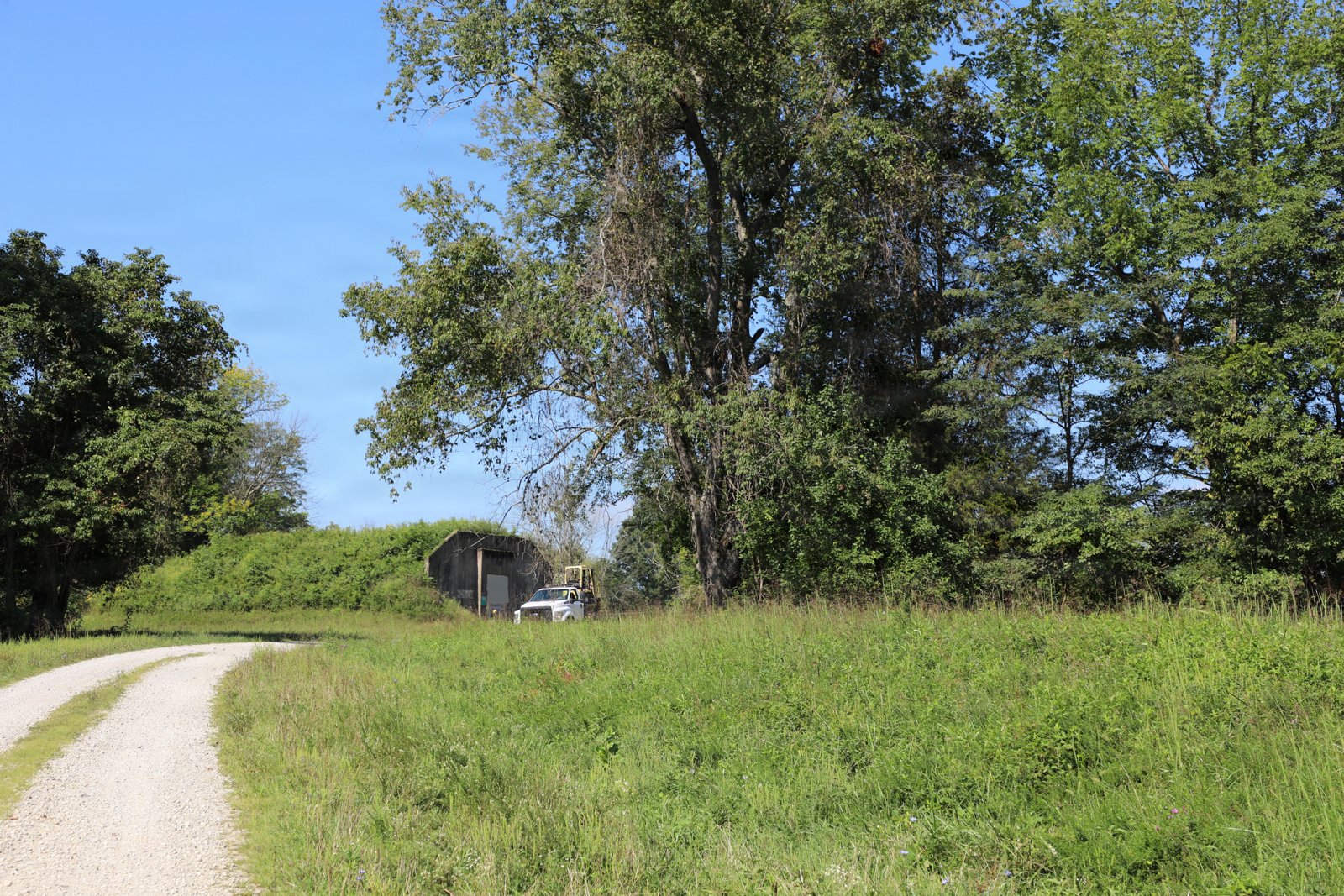
Photo by Dori Whipple, DVIDS. Illustrative image: The exterior of an earth-covered magazine used for ammunition storage at Blue Grass Army Depot.
By Steven Smith
The Justice Department will oppose an emergency request to stop the Army from detonating unstable lead azide at the Iowa Army Ammunition Plant in Middletown, Iowa Public Radio reports. In the same notice to the 8th U.S. Circuit Court of Appeals, the department pointed to a federal regulation that allows waste treatment without an Environmental Protection Agency (EPA) permit in qualifying emergencies.
An EPA permit is what the court has frozen. The Eighth Circuit put the agency's emergency permit on hold late Thursday, Nov. 19, and the order remains in effect until the court rules on a motion to block the blasts, Iowa Public Radio reports. Earthjustice filed that motion on behalf of the Iowa Environmental Council and the Sierra Club's Iowa chapter.
Court records show a one-sentence order, issued at 9:04 p.m. Thursday, imposing an administrative stay on the permit and therefore on the detonation, the Des Moines Register reports in a story republished by Yahoo News. Such stays are common and give courts time to consider matters on tight deadlines, the Register notes.
Before the court acted, the Army had already changed its own schedule. Acting Army Secretary Adam Telle moved the detonation from Friday to Monday, Nov. 23, saying Monday was the latest the Army could wait before a forecast drop in temperatures that could make the explosive more unstable, according to Iowa Public Radio. He did not announce a time for Monday's operation.
The government's Friday filing addresses how far the stay reaches. KCRG reports that the response, filed by attorneys for the EPA, stressed the increasing danger that the lead azide might explode on its own and ended by noting that the court's order applies only to the EPA permit.
According to the passage KCRG quotes, EPA regulations under the Resource Conservation and Recovery Act, the federal hazardous waste law, authorize the Army to carry out waste treatment without an EPA permit in qualifying emergencies, where it determines there is an immediate threat to human health, public safety, property or the environment. That passage also notes that the Army is not a party to the case.
A full response is still to come. The Justice Department said in its Friday filing that it plans to file a response opposing the emergency motion by Sunday, ABC News reports. The Register reports it is not clear whether the court intends to rule before Monday.
Earthjustice senior attorney Thien Chau said Friday that the court could rule before Monday but gave no timetable, according to Iowa Public Radio. Chau called the regulatory exception an "extraordinary and extreme backstop" and urged the Army not to invoke it to bypass the court proceedings, the outlet reports. He said the Army cannot rely on the suspended permit to carry out the blasts.
None of these reports says the Army has decided to use that provision. KCRG reports that the Army has not detailed the timing or other specifics for Monday, and that the station's repeated requests to the Army for more information on Friday went unanswered.
At issue are 68 barrels of lead azide that have been stored at the plant for more than 20 years, according to the Register, which puts the quantity at nearly 9,500 pounds. Iowa Public Radio describes it as roughly five tons. Lead azide is the primary explosive used to initiate munitions, ABC News notes.
ABC News cites the EPA as saying that recrystallization has increased the material's sensitivity to friction and shock, and that disturbing the containers could create an unacceptable risk of unintentional detonation.
In court, the groups argue the EPA gave residents too little notice and failed to require a full review of alternatives or adequate testing and cleanup, Iowa Public Radio reports. Their emergency motion says lead dust could travel 100 miles or more under some weather conditions. According to that filing, the Army's latest modeling projects lead dust settling across an area about 25 miles long and 5 miles wide, ABC News reports.
One alternative the groups want examined more closely is chemical neutralization. The Army says chemical treatment would require prolonged handling of the 68 drums, increasing the risk of an accidental explosion, according to Iowa Public Radio.
Citing public interest in the detonation, the Army released a joint statement from the Department of the Army, the Department of Health and Human Services and the EPA on DVIDS, the military's media distribution service. The statement reads in part: "Officials have been meticulously planning for this event since March, and all agencies involved are prepared to take the most extreme mitigation measures available to ensure there is no risk to the public and any disruptions are minimized." It does not mention the court's order or give a detonation date.
Elected officials and emergency managers have weighed in as well. The postponement followed calls from lawmakers in both parties for answers about health risks and safety precautions, and Iowa Gov. Kim Reynolds said Thursday that she had urged Telle to delay, Iowa Public Radio reports. On Friday the Iowa Emergency Management Association asked Reynolds to issue a disaster emergency proclamation for potentially affected counties and to activate the State Emergency Operations Center, the outlet reports.
Three developments would settle the immediate question. The first is the government's opposition brief, which the Justice Department says it will file by Sunday. The second is whether the Eighth Circuit rules on the emergency motion before Monday, when the Army says its weather window closes. The third is whether the Army states that it will wait for the court or act under the emergency regulation. Beyond the emergency motion, the EPA has until Dec. 29 to turn over the full record on the permit and the groups have until Jan. 12 to file their arguments, WHO 13 reports in a story republished by Yahoo News.
Leave a Reply